
Playing Project Zomboid isn’t just about escaping zombies and scavenging materials and food wherever you are. It’s about survival in the long-run. The game draws you out to the point wherein looting houses and stores just won’t be enough. This is where farming in Project Zomboid comes in as growing crops that you can call your own can become a lifesaver.
Project Zomboid farming is more than just planting seeds, then waiting for your crops to grow. You have to tend to your crops, nurture them, and even save them from diseases and zombies that may trample over them. It becomes crucial to have an understanding of the farming system the game has.
On that note, we’ve prepared this Project Zomboid farming guide that will help you to successfully farm your way through the apocalypse. From learning the basics of farming, the seasons system, the best crops to grow, and other crucial information, you’ll be equipped with everything you need to know about farming in the game.
What is Farming in Project Zomboid?
Farming in Project Zomboid is now called the Agriculture skill in the game. It allows you to plant seeds and create a sustainable food source. Agriculture is influenced by the game’s seasons system, so crops that you grow will be affected by the different seasons that play out in the game.
In terms of the Agriculture skill, you can get plus points to this when your chosen occupation during character creation is a Livestock Farmer or a Crop Farmer. It’s also fine if you don’t have a farmer occupation as you can manually level up the Agriculture skill through harvested crops you’ve planted.
Project Zomboid farming includes various aspects such as soil tending, watering, growth stages of plants, and dealing with crop diseases. Despite farming seeming to be a convenient way to grow food, it’s also a taxing activity as you have to do certain preparations for your crops, monitor the weather, and state of your crops.
Crops you can grow
Additionally, there are several crops that you can grow in Project Zomboid. These aren’t only limited to vegetables as you can also grow herbs and spices around you.
| Vegetables | Herbs and Spices | Flowers | Grains and Other Crops |
| Bell Pepper | Basil | Black Sage | Barley |
| Broccoli | Chamomile | Broadleaf Plantain | Hops |
| Cabbage | Chives | Common Mallow | Rye |
| Carrot | Cilantro | Comfrey | Wheat |
| Cauliflower | Ginger Root | Flax | |
| Corn | Habanero | Hemp | |
| Cucumber | Jalapeño | Lavender | |
| Garlic | Lemongrass | Marigold | |
| Green Peas | Mint | PoppRosey | |
| Leek | Oregano | Sunflower | |
| Lettuce | Parsley | ||
| Onion | Rosemary | ||
| Potato | Sage | ||
| Radish | Thyme | ||
| Soybeans | Tobacco | ||
| Spinach | Wild Garlic | ||
| Sugar Beet | |||
| Sweet Potato | |||
| Tomato | |||
| Turnip | |||
| Watermelon | |||
| Zucchini |
Most of these crops have respective seeds which are found as seed packets within the game. There are some crops, however, that you can plant in their harvested form such as potatoes.
Why should I learn farming in Project Zomboid?
While farming in Project Zomboid seems to be a heavy task in itself, you should learn how to do it and have a basic understanding of the Agriculture system of the game. This will help you in situations wherein you have limited resources.
Mainly, learning farming is crucial to your long-term survival. When you start in Project Zomboid, most players scavenge for food and sometimes will cook. But there’s only so much fresh produce that goes around, especially if you’re playing multiplayer on a Project Zomboid server. As time passes, resources become limited and perishable foods will spoil. It will certainly benefit you to have a renewable and sustainable food source.
Additionally, farming offers you good strategic advantages such as providing you bait to catch animals through the Trapping skill. It makes it easier for you to catch other sources of food besides relying on found food items. You not only have a steady stock of fresh produce but also have more of an edge over potential game you can hunt.
Lastly, farming is also great for your Project Zomboid server. If you’re playing with friends, you and your fellow survivalists can delegate farming tasks so all of you have good produce, stored food, and even stockpile seed packets for future use. You and your friends will become self-sufficient together without having to scavenge or hunt that often as you all first started.
How do I grow crops in Project Zomboid?
Crop farming in Project Zomboid has several steps that you need to keep in mind before you start tilling the soil. We’ll be breaking this down for you in this next part:
Step #1: Finding a plot of land
First, it’s important to find a good piece of land to plant your crops. Ideally, you’d want to plant on a location wherein zombies won’t be able to easily trample on your crops. Consider the factors of real-life farming like planting under decent sunlight and easy accessibility to a source of water.
You could even consider building walls around your targeted plot of land to better protect your crops. It depends on you on what’s the most efficient way to gain a good harvest while still protecting your crops.
Besides that, also consider allocating space in between your future crops to avoid the spread of plant diseases.
Step #2: Preparing your farming materials and equipment
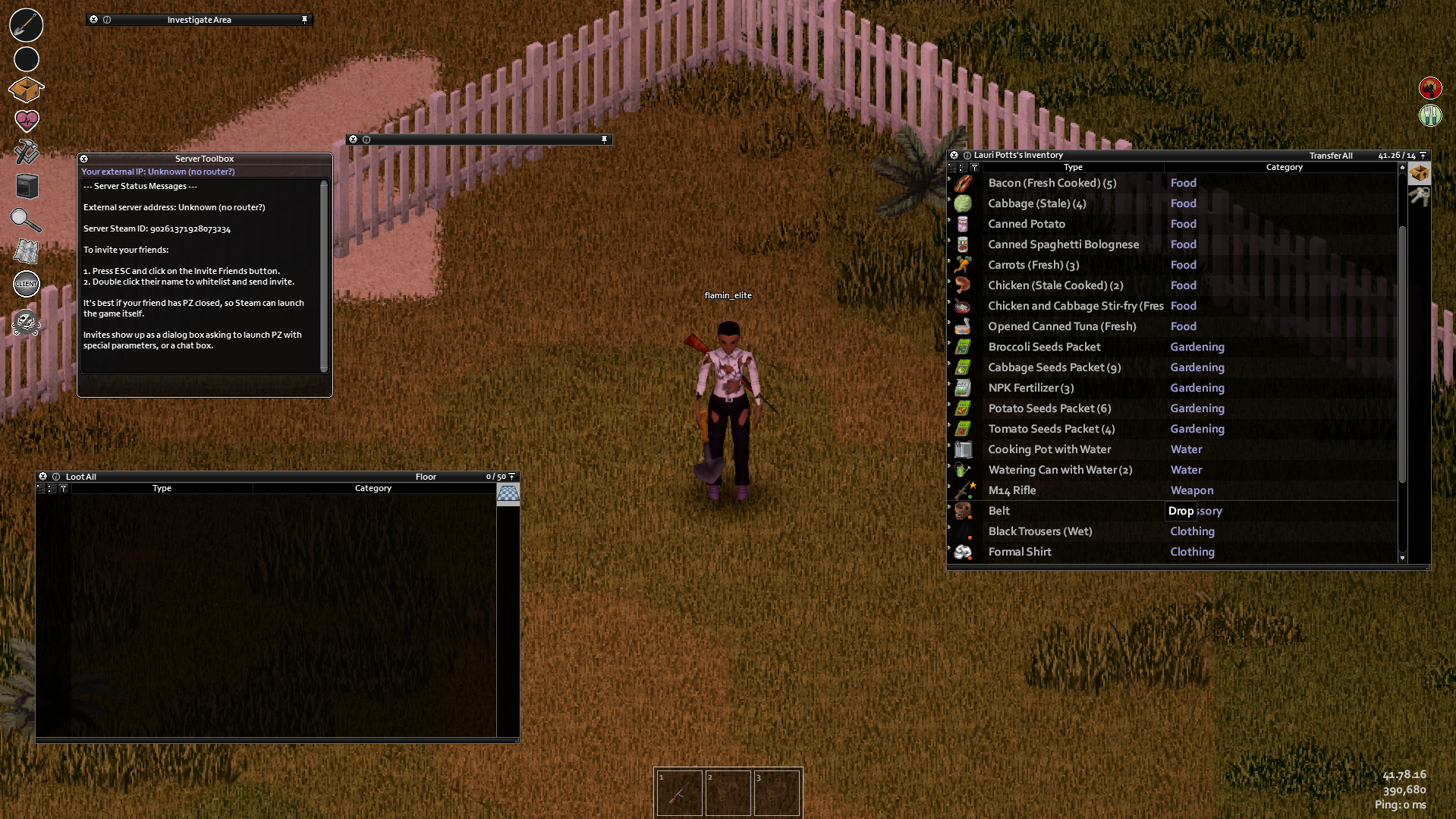
The next step is to prepare your farming materials and equipment. Mainly, you’ll need to find seed packets. You’ll find them scattered around in Sheds, Farmhouses, Warehouses, Storage Facilities, and other similar places.
In terms of tools, you’ll mainly need a gardening tool such as a Trowel or Shovel, Watering Can, and a Gardening Spray Can. Additionally, things like fertilizer, Composters, and also Sacks can improve your crop farm.
Step #3: Digging the ground
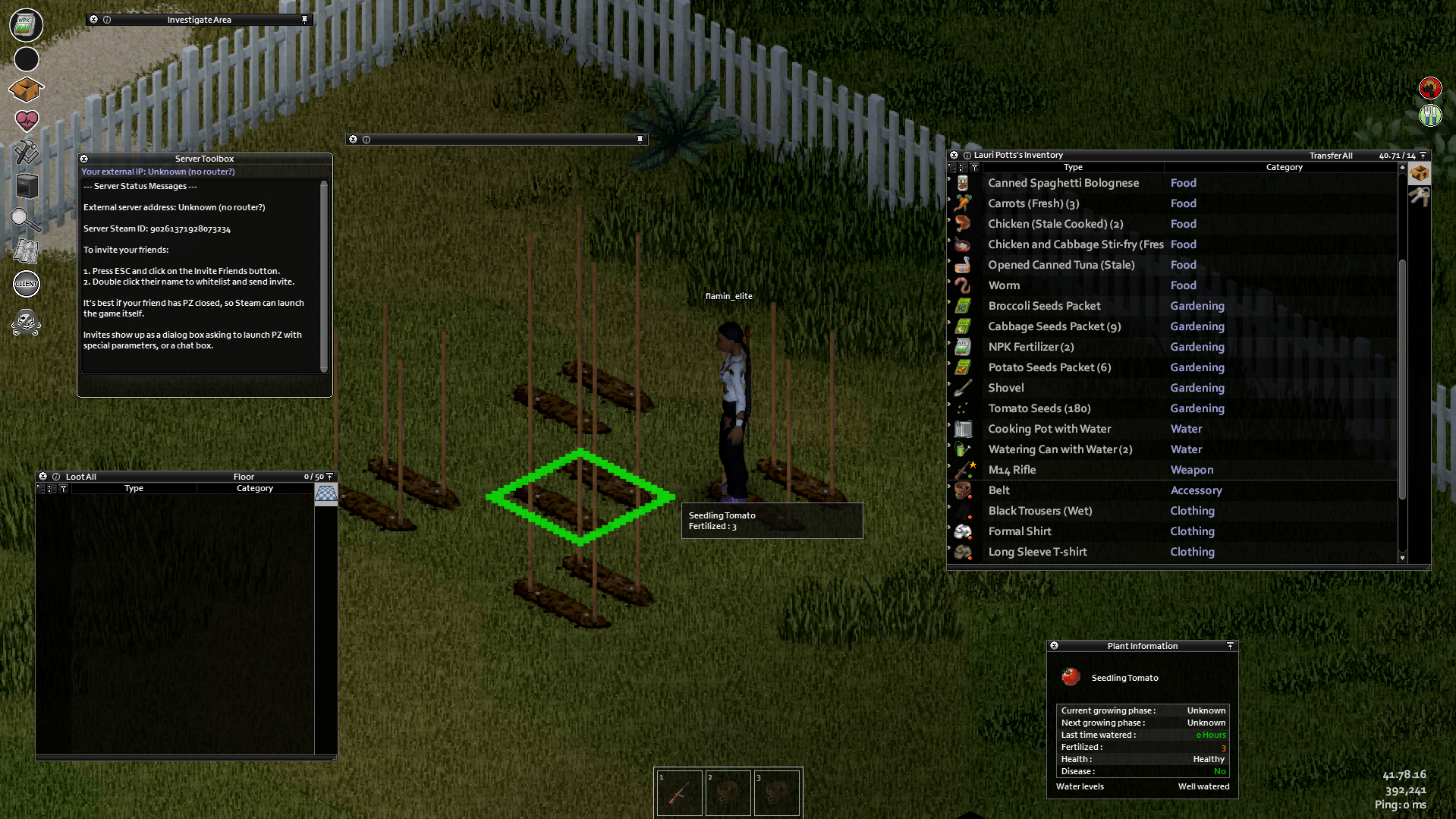
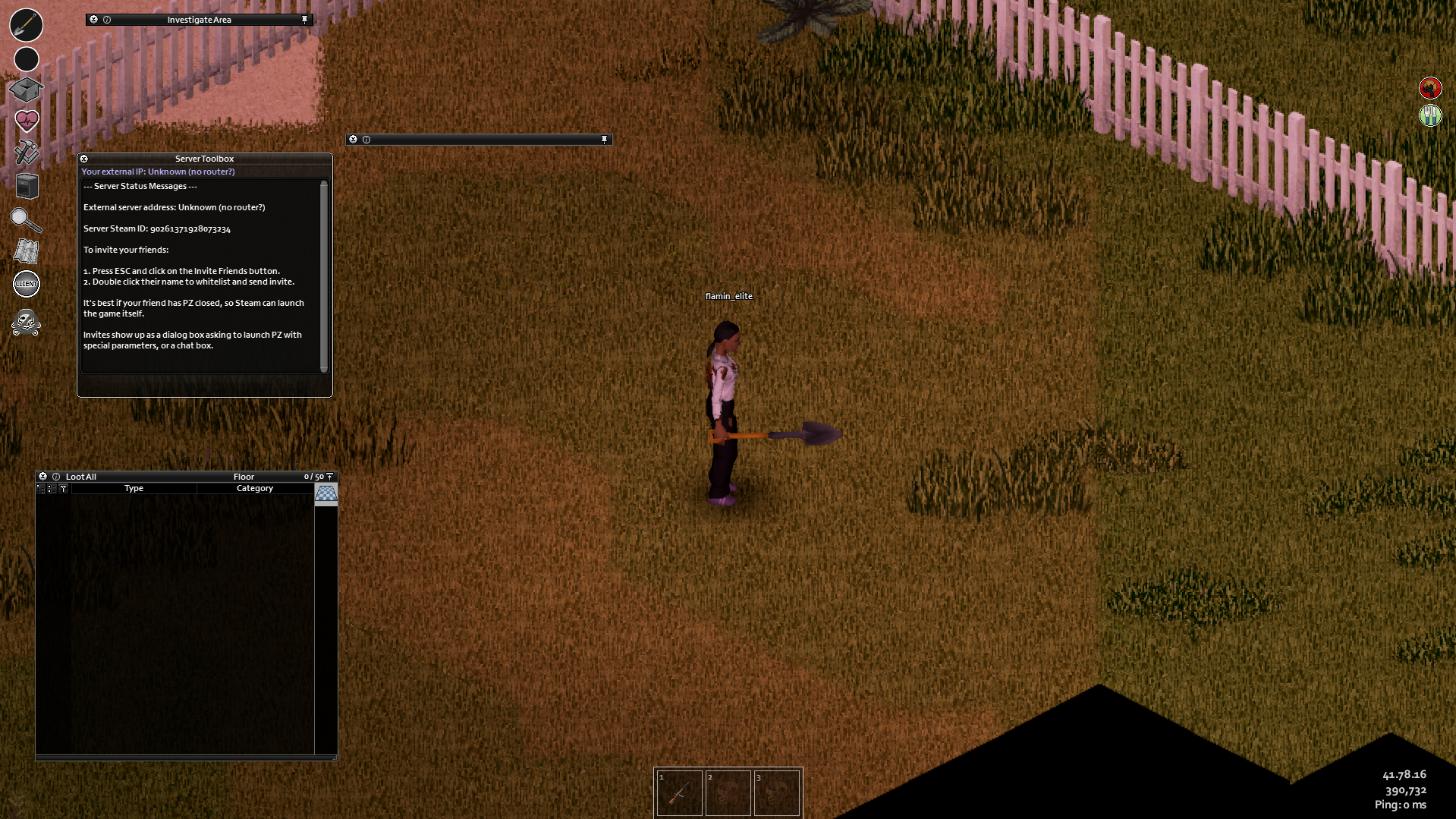
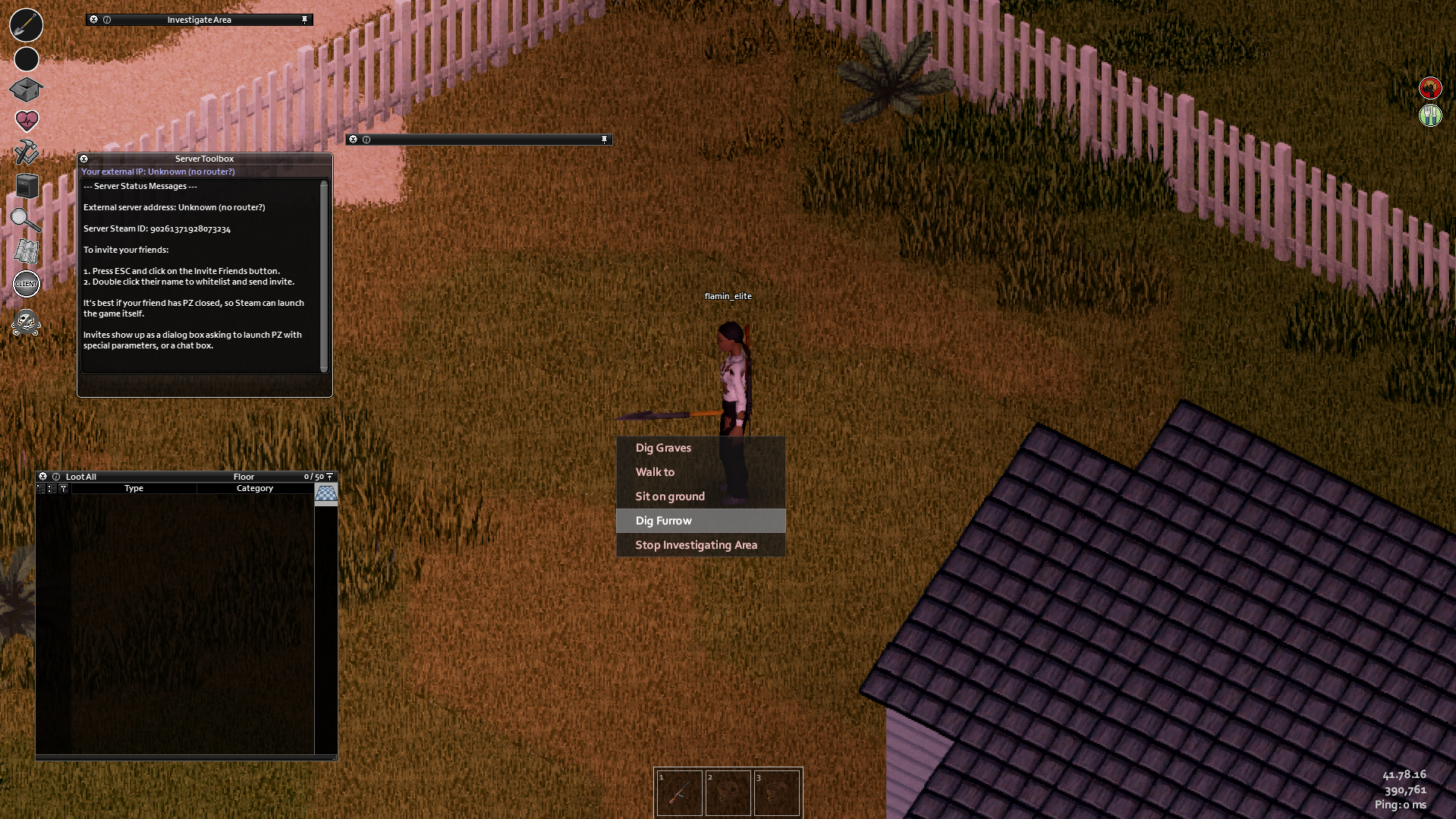
When it comes to digging the ground, simply use your gardening tool, right click on a piece of land and then click “Dig Furrow.”
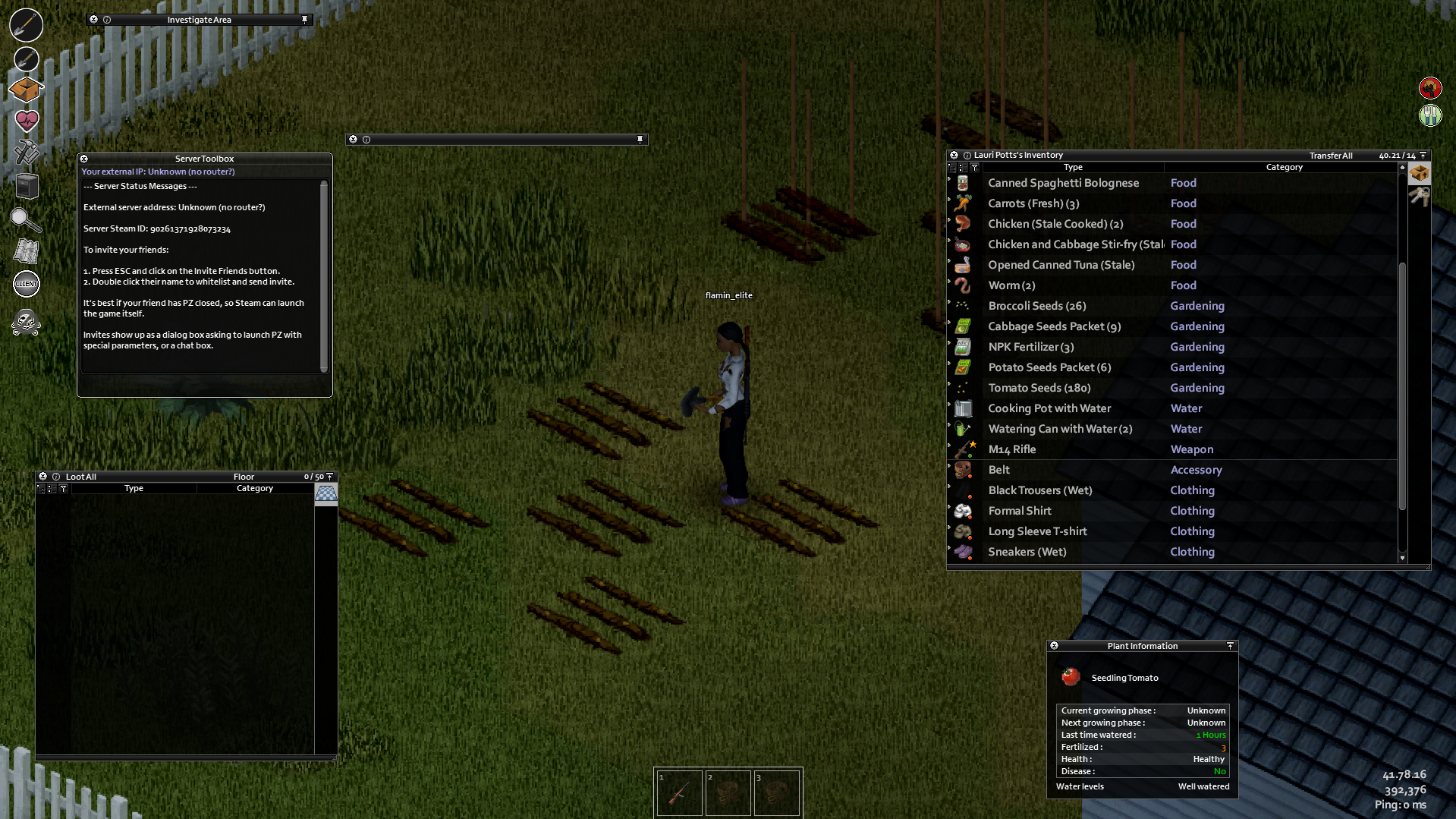
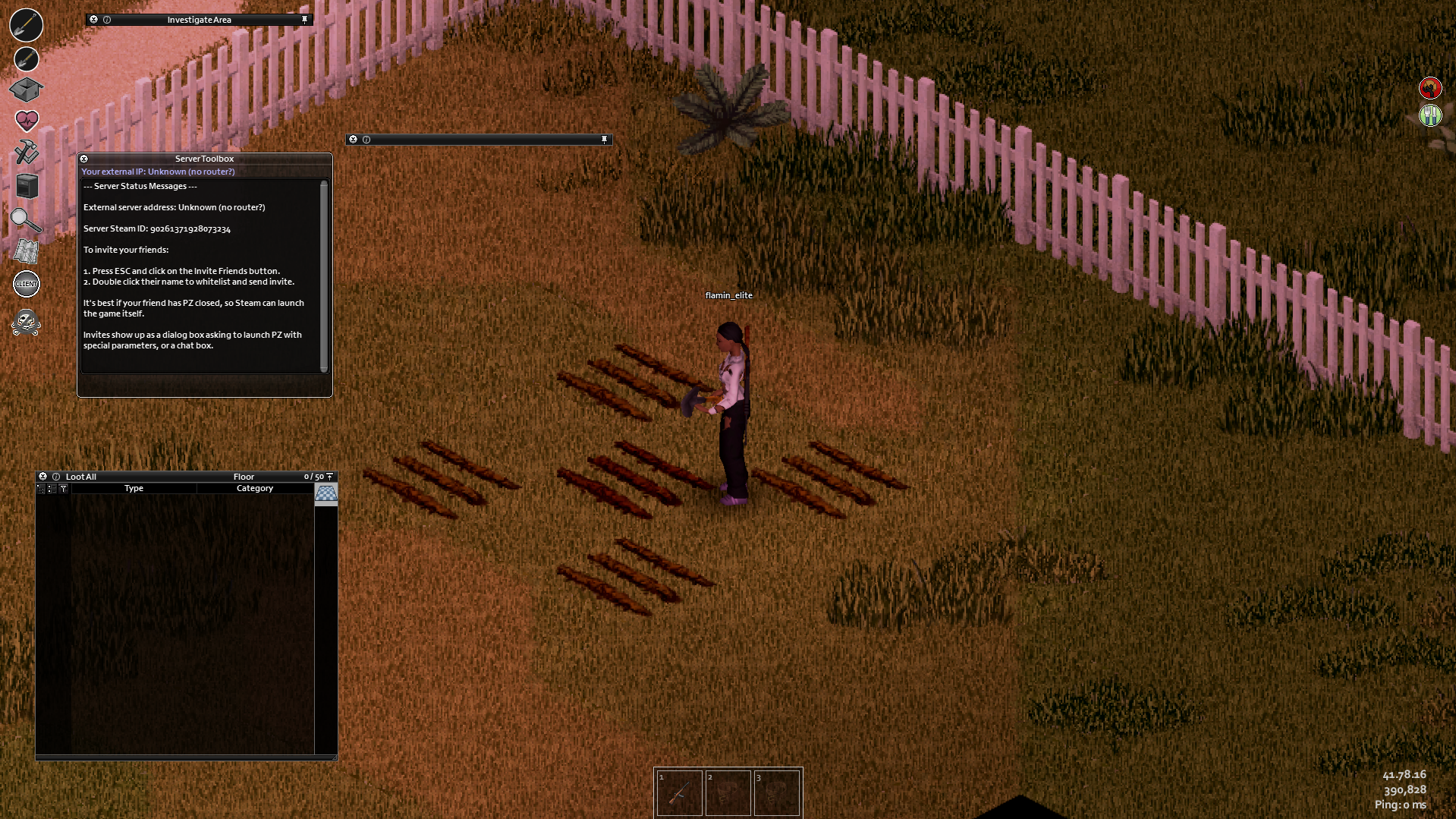
You should find a patch of dirt with three furrows.
Step #4: Planting seeds
Now that you have a place to plant your crops, you can then open your seed packets. You’ll then have some loose seeds that you can plant.
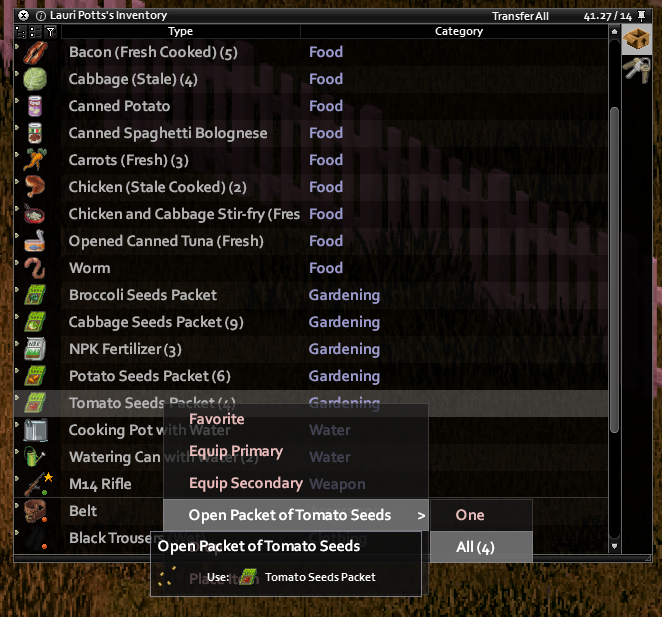
Simply right-click on a tile of dirt and click “Sow Seed.”
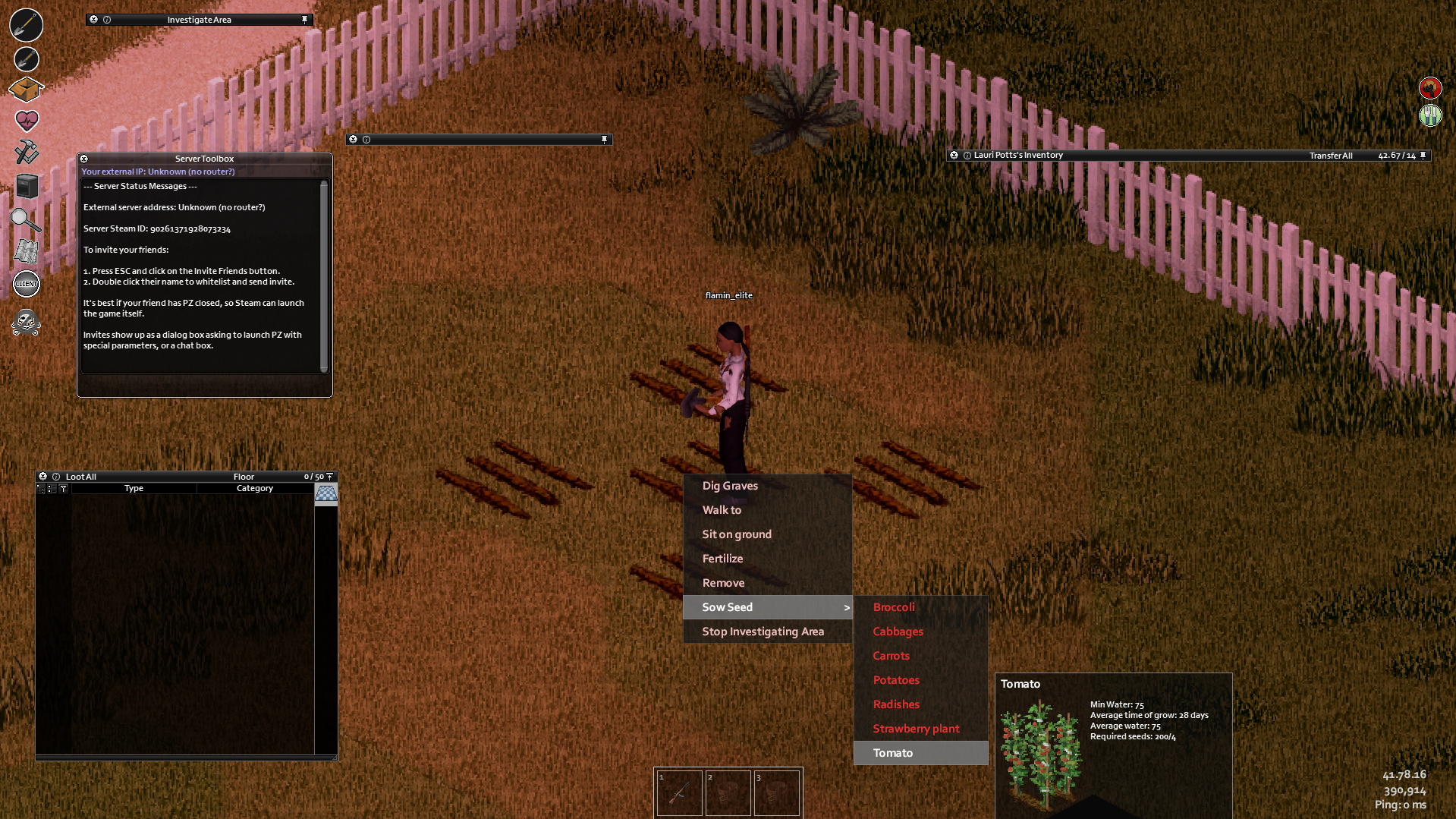
Your seed will have been planted, and then you can check information on the seed in the “Info” tab of the seed.
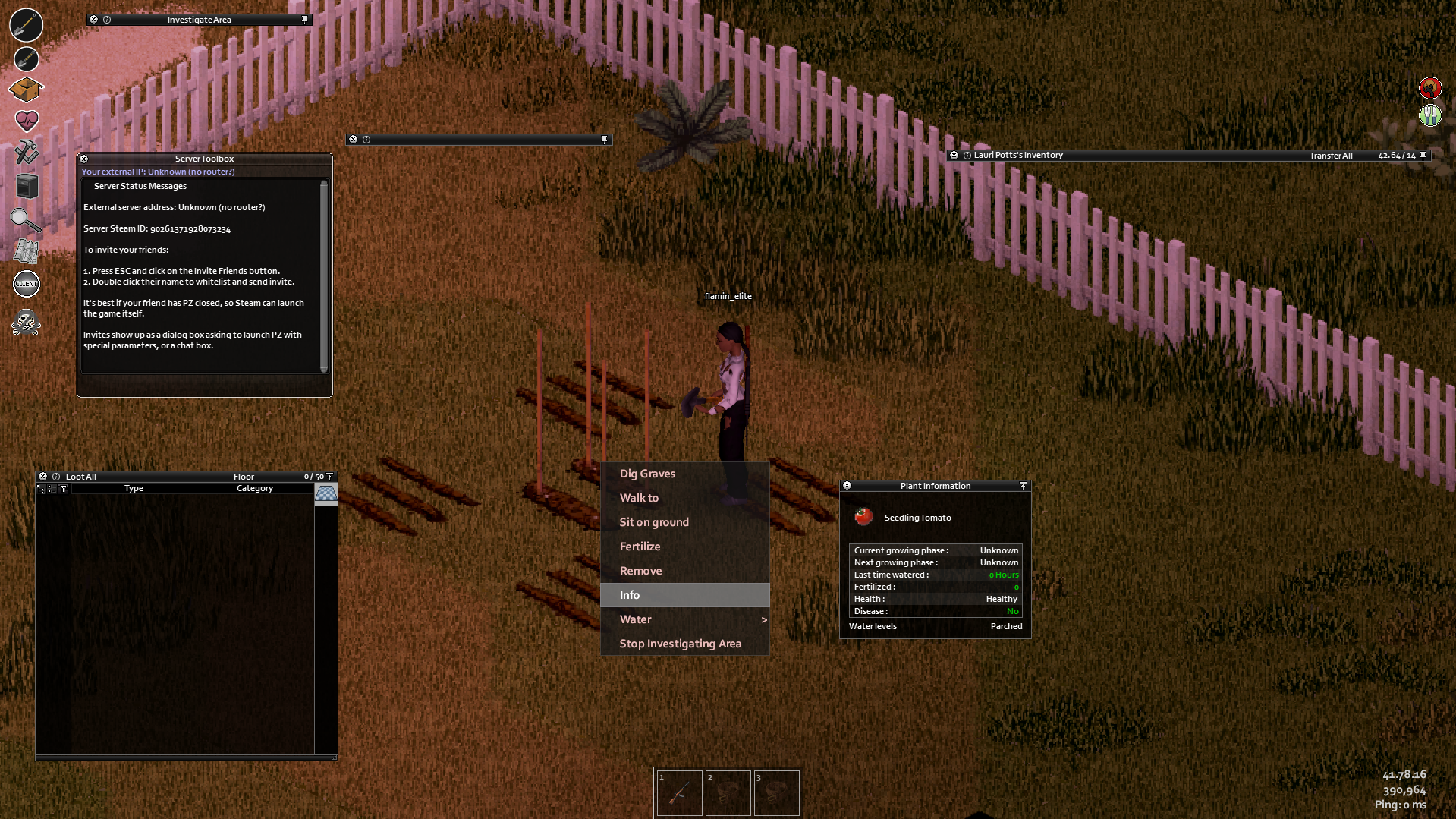
There’s information on the health of crops and how watered they are. Usually, it’s expected from you to water at least 50 units of water on your crops.
Step #5: Growing crops
Next is growing your seeds into harvestable crops. As mentioned earlier, you’ll have to water your plants. However, be careful of watering your pants as they can become underwatered or overwatered, potentially putting your plants at risk of future diseases.
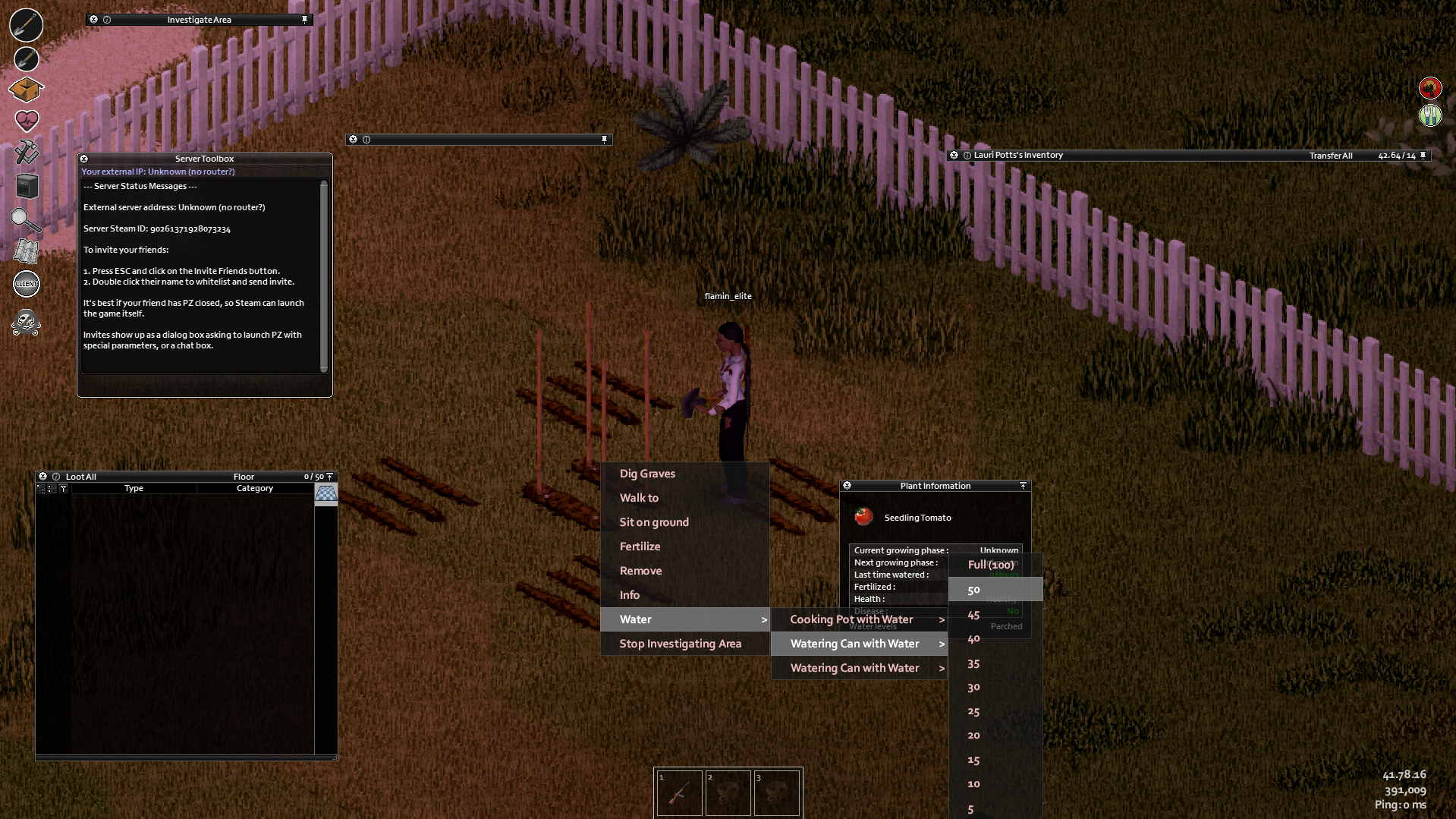
There are different growth phases of crops in Project Zomboid. The typical phases are as follows:
- Seedling
- Young
- Almost ready to harvest
- Ready to harvest
- Seed-bearing
When trying to grow your crops, you can use NPK Fertilizer to decrease the time needed to grow a plant. Plus it can improve your plant’s health. Keep in mind, however, that fertilizer is hard to find.
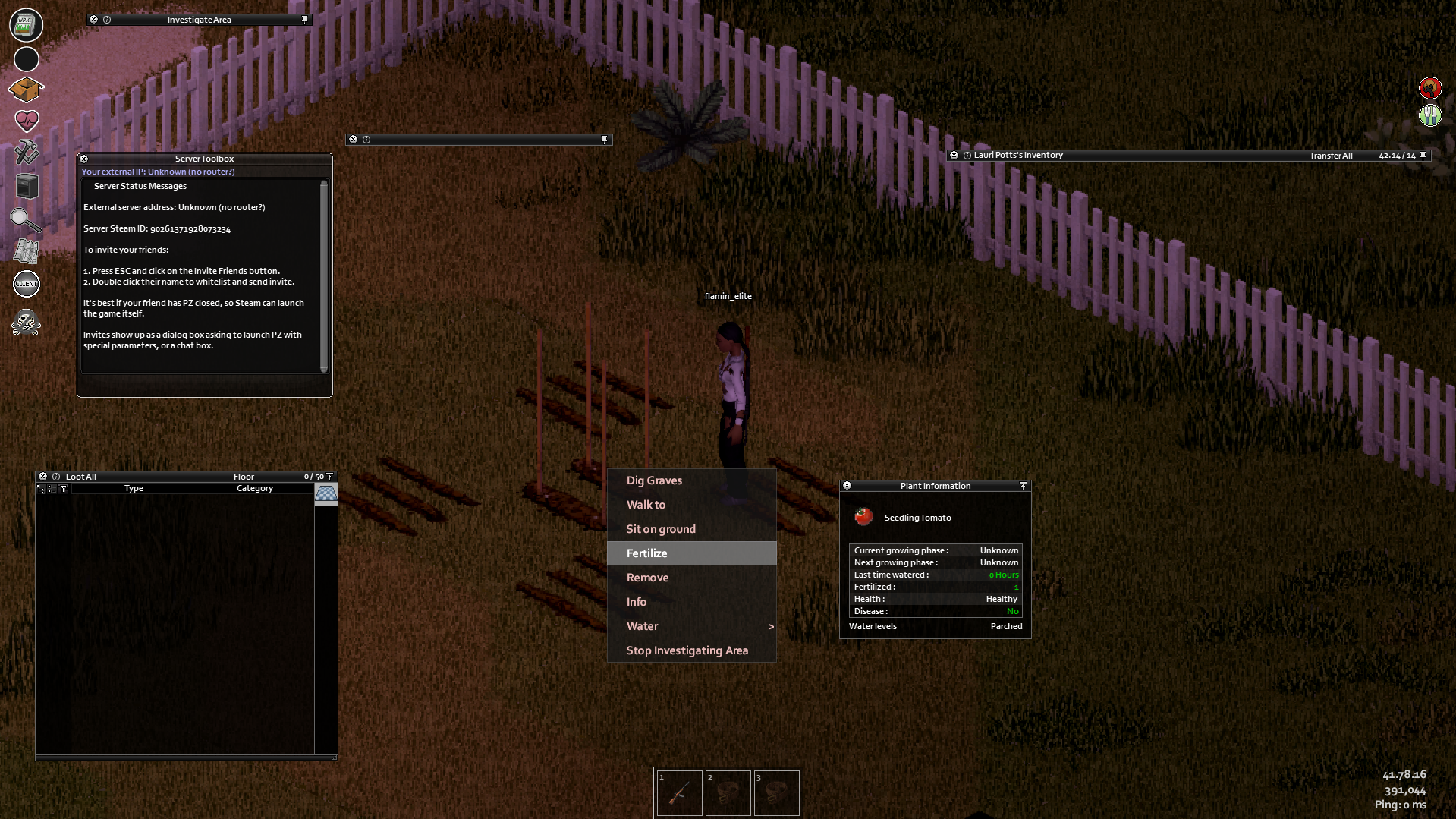
Another thing to consider when tending to your crops is the best start growing season for your crops. Usually, you can find this on the seed packets on your seeds before planting them. But you can also check out the Crop Specifications of the Project Zomboid Wiki for reference.
Step #6: Getting your harvested crops
If your crops are ready to harvest, you can then simply right-click on them to confirm that your crop is either “Ready to harvest” or is “Seed-bearing” for you to harvest them. Either phase is fine. However, the seed-bearing phase means you’ll get the crop and seeds it has produced. The example below is from a screenshot by player Pascuccii on Reddit, as growing crops does take a lot of days.

Best crops to grow in Project Zomboid

Cabbage
Cabbage is one of the easiest and fastest crops to grow in the game. It only takes two weeks at most and this crop also has a good nutritional value. The only downside to it is that it spoils quite fast after you harvest it. Ideally, you should plant this when you require a quick source of food.
Potatoes
Potatoes aren’t really a seed-bearing crop. So, you can plant them in their natural form. This crop has high calories and a good shelf life so you can stock up on a lot of potatoes when you need them. However, keep in mind that potatoes do have a low growth rate.
Tomatoes
Another good crop you should try growing is tomatoes. You can easily find seeds of tomatoes after harvesting them, which is great for replenishing your crops. But keep in mind that tomatoes are easily prone to getting plant diseases.
Carrots
Then we have carrots, which are often used for trapping bait in Project Zomboid. This crop has an average growth rate. But just like tomatoes, they can spoil quickly. Carrots are pretty decent for a lot of food you can cook, but they’re ideal to use just for bait and as supplementary food.
Broccoli
For Broccoli, this is quite a bountiful crop you can harvest. It has an average growth rate too. Investing in Broccoli is good for Project Zomboid servers with multiple players. Keep in mind, however, that this crop takes up a lot of space if you don’t know how to store it properly. Plus, it spoils fast.
Challenges in farming in Project Zomboid
Just like in real-life, crop farming in Project Zomboid doesn’t always go well. You’ll encounter challenges that can slow down your progress when farming. We’ve listed a couple of obstacles you will encounter and some tips on how to combat them.
Plant diseases

Currently, there are three diseases that you should watch out for when caring for your crops. Diseases can happen when your plant reaches a certain growth phase, making them prone to contracting that disease.
Mildew
Mildew is a fungus or rather a mold that can make your plants grow slower and eventually destroy them. To cure this, craft a Mildew Spray from a Gardening Spray Can and Milk. It’s also required from you to either have the Crop Farmer occupation or have read the magazine “Magazine: Kentucky Farmer – June 1993.” After you’ve crafted the spray, you then spray this on your plants to cure them of Mildew.
Flies
Next are flies which can decrease the water level of your plants. Mildew spray also works with this method. But you can also craft an Insecticide Spray with a Gardening Spray Can, Water, and Cigarettes. You’re once again required to have either Crop Farmer occupation or have read the magazine “Magazine: Kentucky Farmer – June 1993.”
Devil’s Water Fungi
Then we have Devil’s Water Fungi which lessens the harvest yield of your plants. This happens when your plants have high water levels. To solve this, you have to lower the water level of the plant to less than its usual amount. This is difficult, especially if you’re tending to several plants and the best way to treat this is by uprooting the plant itself and then replanting.
Plant health
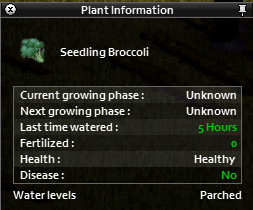
Another challenge that comes with farming is maintaining ideal Plant Health. As plant health starts at a value of 50, this can increase or decrease over time depending on the factors surrounding your crops.
You’ll have to monitor how much you water your plants and if they’re gaining enough sunlight as this can influence plant health. Underwatering and overwatering your plant have their corresponding minus points to your plant health. Moreover, you can also monitor the various health levels of your crops from Stunted, Sickly, Healthy, Verdant, and Flourishing.
Zombies roaming around
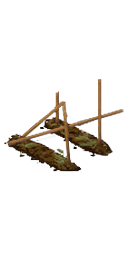
The last issue you may commonly encounter when farming your crops is roaming zombies. They can trample over your crops and easily destroy all your hard work. It’s ideal to plant in a good and safe location, away from crops or at least you’ve placed a form of protection around your crops. Another thing to consider would be Crawler Zombies which are also challenging to spot.
At the end of the day, Project Zomboid farming becomes an essential skill for players that ensures that you have a steady food supply throughout the apocalypse. By choosing the right crops, taking the time and effort to tend to your plants, and protecting your farm, you can become self-sustainable and especially during situations wherein food supplies run low.
Ultimately, it’s important that you carefully plan and be patient when it comes to crop farming. Monitoring water levels, diseases, and the in-game seasons will allow your farm to thrive and give decent produce. Experiment with different strategies and even understand the different crops available to you in-game as farming can be both an enjoyable and fruitful endeavor in Project Zomboid.

Renee is a freelance writer with a passion for gaming and pop culture content. While she mainly writes about games, she also does graphic design and illustration work from time to time. With a passion for the creative arts, she blends her skills to tell stories across various mediums.
Leave a Reply