

As you venture out in Minecraft, you’ll encounter different mobs to interact with. Some can be gentle and provide resources, such as sheep, Cows, and Pigs, which are all passive mobs. There are even Villagers whom you can trade with, exchanging Emeralds for items that are challenging to find on your own. However, for rarer items that you might need, such as Crying Obsidian, Fire Charges, Iron Boots with Soul Speed, and Spectral Arrows, you might need to take on the daunting task of Piglin trading.
Unlike Villagers, who you can interact with without hostility, Piglins are the exact opposite. You need to be prepared with the right gear and even ready yourself for the conditions of where they reside, which is the Nether. Piglins also don’t trade with Emeralds, but rather with Gold. However, despite the hefty price they ask, the items you can get are certainly worth it.
While Piglin trading seems quite easy, it isn’t exactly a walk in the park. A journey into the Nether can be rewarding if you know how to navigate it with preparedness. In line with that, we’ve prepared this quick guide on the things you should know about Piglin trading, items bartered by Piglins, and an overall guide to trading with them.
What is Piglin Trading?
Piglin trading, or simply bartering, is basically a Minecraft game mechanic wherein players can exchange items with Piglins to get various items in-game.

It works just like trading with Villagers. What makes it different is the item that players have to trade with, which is a Gold Ingot. Piglins love Gold in general. They’ll pick up other gold-related items or gold-related blocks nearby. However, you can only trade with them using Gold Ingots.
To barter with Piglins, the only item you need to offer is a Gold Ingot to a Piglin. You have the option to drop Gold Ingots near an adult Piglin or right-click a Piglin while you have a Gold Ingot on hand. The Piglin will then take your Gold Ingot, appraise it, and once a Piglin finishes examining your Gold Ingot for around six seconds (in Java Edition) or eight seconds (in Bedrock Edition), an item is dropped by the Piglin.

With that, a bartering transaction finishes, and you’ve done some Piglin bartering.

In terms of trading with other pig-like mobs, you won’t be able to trade with Hoglins, Zombified Piglins, Zoglins, and baby versions of Piglins, Zombified Piglins, Hoglins, and Zoglins.

If you encounter a Piglin turning into a zombified Piglin before you finish a barter, the newly zombified Piglin drops the Gold Ingot. On the other hand, if you give a Baby Piglin a Gold Ingot, it just takes it and doesn’t return you with any items. Similarly, you won’t be able to trade with Piglin Brutes as they ignore Gold Ingots.
Keep in mind, however, that Piglins can still become hostile during bartering transactions. If you break any Gold Blocks or containers within the vicinity, Piglins will certainly turn aggressive and attack you.

So, it’s worth noting to be careful in bartering and letting the barter finish to get your item.
Items Bartered by Piglins
Now that you have a basic idea of Piglin Trading, we can get to the details of what items Piglins give to you after Piglin bartering. Check out our loot table below for reference on what you can expect to get when trading and each item’s respective drop rate.
| Item | Quantity Dropped per Trade | Drop Rate |
| Arrow (Bedrock Edition) | 6-12 | 8.71% |
| Blackstone | 8-16 | 8.71% |
| Crying Obsidian | 1-3 | 8.71% |
| Ender Pearl | 2-4 | 2.18% |
| Fire Charge | 1 | 8.71% |
| Gravel | 8-16 | 8.71% |
| Iron Boots | 1 | 1.74% |
| Iron Nugget | 10-36 | 2.18% |
| Leather | 2-4 | 8.71% |
| Nether Brick | 1 | 8.71% |
| Nether Quartz | 5-12 | 4.36% |
| Obsidian | 1 | 8.71% |
| Potion of Fire Resistance | 1 | 1.74% |
| Soul Sand | 2-8 | 8.71% |
| Spectral Arrow (Java Edition) | 6-12 | 8.71% |
| Splash Potion of Fire Resistance | 1 | 1.74% |
| String | 3-9 | 4.36 |
| Water Bottle | 1 | 2.18% |
Soul Speed Enchanted Book

A special item you can get from exclusively trading with Piglins is an Enchanted Book with the Soul Speed Enchantment, spawned at a random level. This enchantment allows players to walk across Soul Sand with Soul Speed swiftly. So this is applied to Boots. There are three different Soul Speed Enchantment levels you can get, which are the following:
- Soul Speed I
- Soul Speed II
- Soul Speed III
Where to find Piglins?

As you’ve learned about Piglin trading and the items you can get from bartering, the next question is: where do you actually find them? Well, Piglins only spawn in the Nether, and they’re found in Crimson Forest biomes and Nether Wastes. It’s also possible to find large groups of Piglins inside Bastions, as they can guard Treasure Rooms alongside Piglin Brutes.
Additionally, Piglins spawn in both Java and Bedrock Editions of Minecraft, so you can expect to find them regardless of the platform you’re playing on.
How do I trade with Piglins?
Trading with Piglins is fairly straightforward, but it does require some preparation and patience.
As mentioned earlier, Piglins can turn hostile if you break Gold Blocks while trading. However, another way that players can anger Piglins is by not wearing any Gold Armor. Having at least one piece of Gold Armor makes it easier for you to approach Piglins to trade.
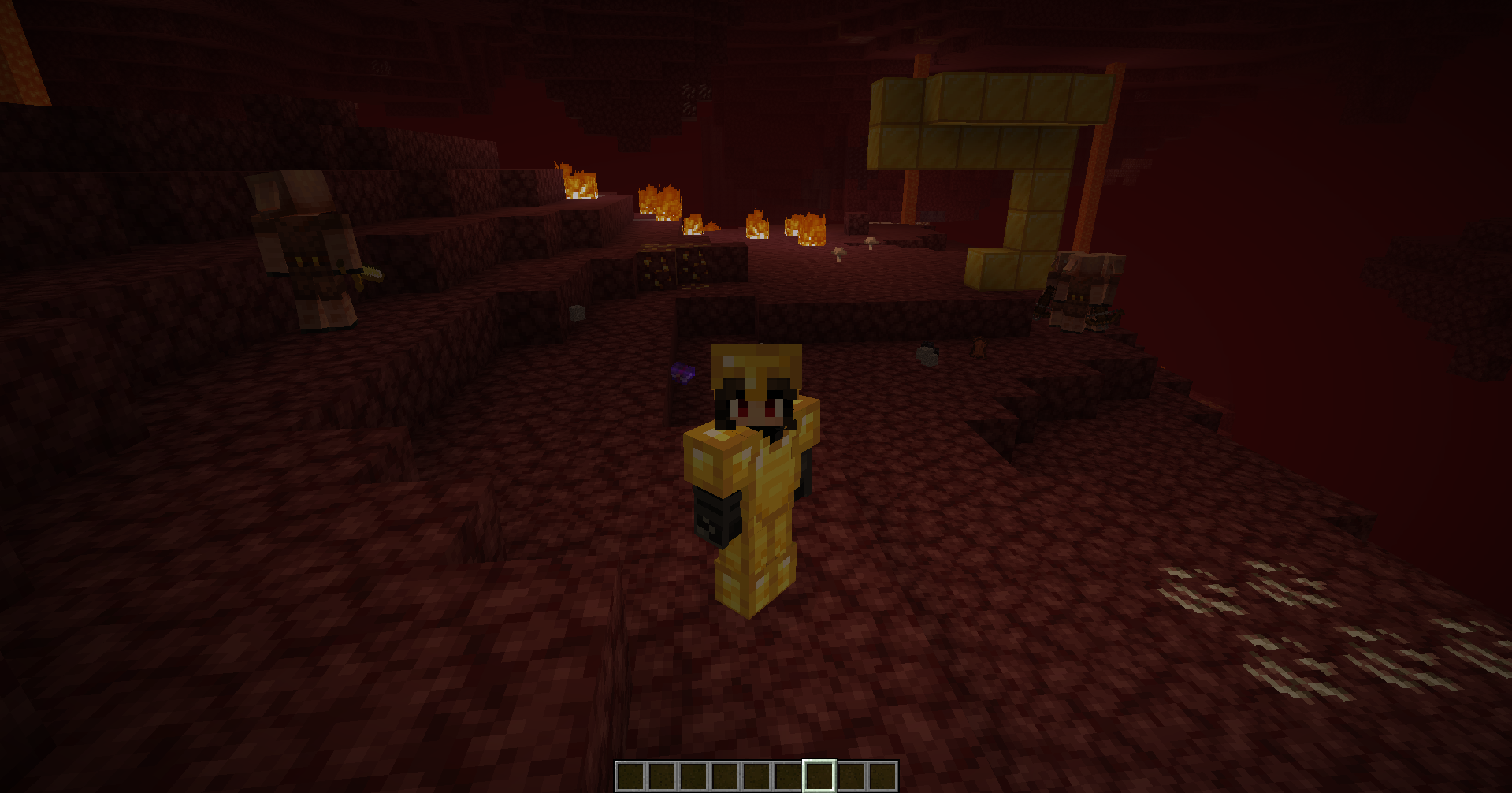
Plus, you’ll be able to explore the Nether more safely.
Do note that having Gold items on hand won’t give you the same effect as wearing Gold Armor. So, having any Gold tools, weapons, or other Gold-related blocks won’t protect you from Piglin hostility.
Another thing you need to prepare for is to have a stack of Gold Ingots with you. This is the only currency Piglins accept, so having a lot of this will give you higher chances of getting the items you want.

Once you have your armor worn and Gold Ingots prepared, you can then approach a Piglin by either dropping a Gold Ingot or right-clicking a Piglin while you’re holding a Gold Ingot.


If you do this correctly, the Piglin will appraise your offer, then the Piglin throws back an item instantly. The range of items comes from the loot table list of Piglin trades mentioned earlier.

Tips and Strategies for Piglin Trading
When you trade with Piglins in the Nether, it’s important to remember that Piglins can be unpredictable. Their behavior differs depending on whether you’re playing in the Java Edition or the Bedrock Edition of Minecraft. In Java Edition, Piglins will take their time with the Gold and hand over an item after a few seconds, even if it becomes hostile afterwards. But in Bedrock Edition, a Piglin immediately finishes trading and attacks you if you break containers or gold-related blocks nearby.
This quirk is actually useful since it lets them barter rapidly when gold blocks are repeatedly broken nearby or pushed with pistons. You get to skip bartering animations in Bedrock Edition. This becomes especially helpful when farming Ender Pearls, since Piglins are the only source of them besides killing Endermen.
With that, Piglin trading can be a powerful tool if done properly. Bartering mixes risk with reward. Unlike safe and predictable trades you get from Villager trading, Piglin trading requires you to venture into the Nether, so you need to prepare the right gear for your journey and stay alert for Piglins that might turn hostile. Despite the dangers, however, venturing into the Nether is worth it, especially for the loot you can get.
By understanding how Piglins behave, where to find them, and how to trade with them, you can turn Piglin bartering into a reliable resource that gives you a survival edge and makes your time in Minecraft both efficient and rewarding. So, grab your Gold, head to the Nether, and start bartering with Piglins to see what loot you can score.

Renee is a freelance writer with a passion for gaming and pop culture content. While she mainly writes about games, she also does graphic design and illustration work from time to time. With a passion for the creative arts, she blends her skills to tell stories across various mediums.
Leave a Reply