


If you register a domain but don’t intend to use it right away, that’s called “parking”. There are many reasons you might want a parked domain, and in order to understand this practice, you’ll need to know what those are.
You can park a domain to reserve it for later use, monetize it, and even resell it. Registering domains is so simple (and often cheap) that parking one can be a smart move from a business perspective.
In this article, we’ll answer the question: “What is a parked domain?” Plus, we’ll go over the reasons you might want to engage in this practice. Let’s get to it!
What Is A Parked Domain?
Typically, you’ll buy a domain name (such as mywebsite.com) in order to use it immediately for a new site. If you purchase a domain just to keep it on hand, however, you’ve ‘parked’ it. You can engage in domain parking for as long as you need, if you’re comfortable paying the renewal fees.
When visited in a browser, a parked domain will typically show some type of message to let you know it has an owner, a website will be coming at some point, or it’s up for sale. This is known as a parked domain page:
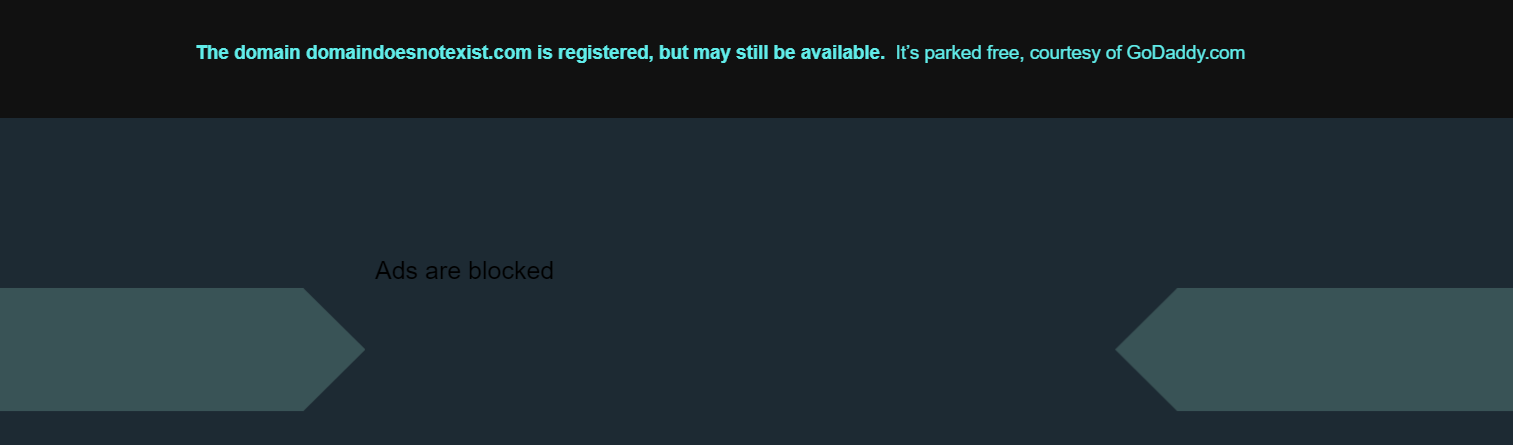
Some registrars will automatically display a message indicating that a domain has an owner if you don’t connect it to a web hosting provider. This is to let users know the property is not available for registration.
It’s important to note that a parked domain is not the same as a redirected domain (a domain you use to send visitors to another address). If you have a website connected to the domain, and that site is under construction or inactive, that’s not a parked domain either.
What Is A Domain Parking Service?
Domain parking is an ‘extra’ that some web hosts sell. This type of online service lets you keep the domain parked, while helping you set up a basic landing page or parking page that you can use to monetize the domain.
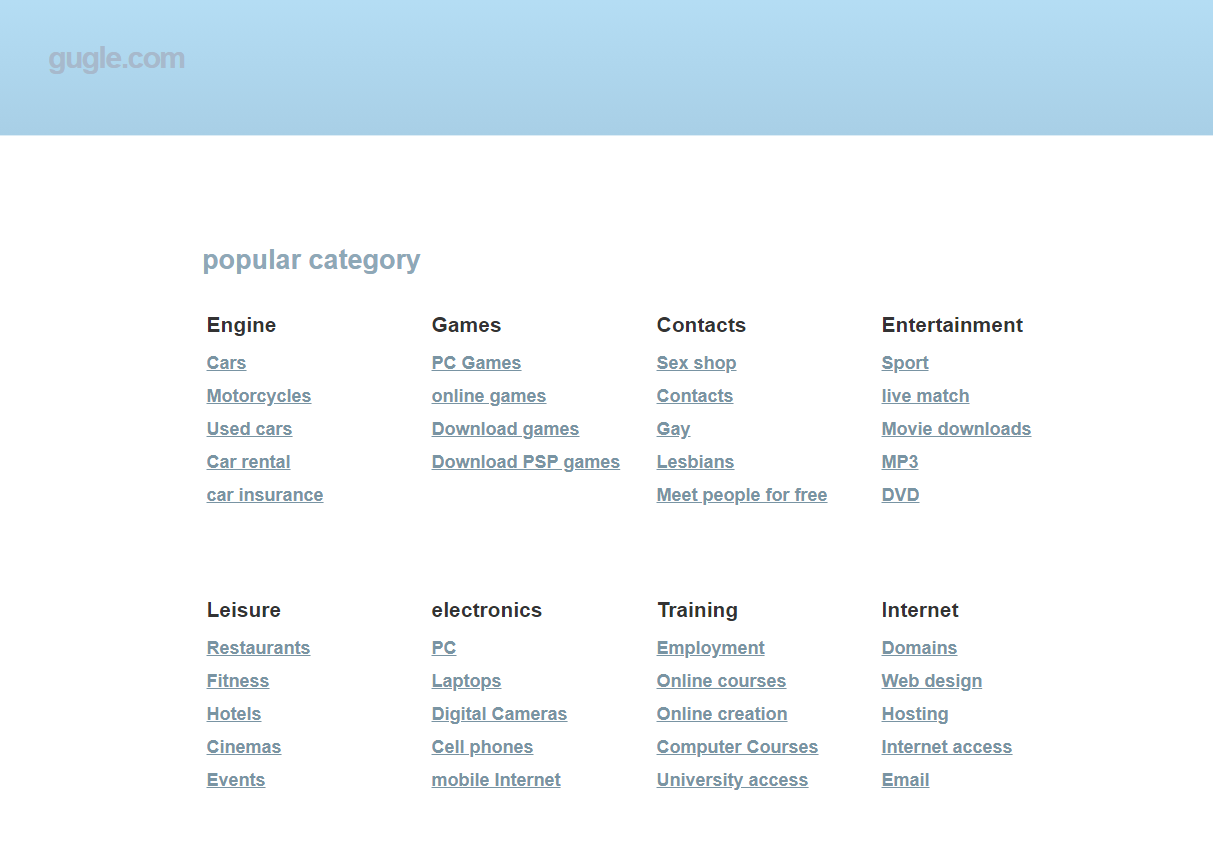
There are a lot of ways to monetize a parked domain, even if you’re saving it for future use. Quality domain parking services will let you share contact information and set up ads, so you get paid for visits.
Technically, domain parking services are basic hosting plans. The biggest difference is that most web hosts only charge a fraction of what their hosting plans cost in order to set up parking pages.
Why Might You Want A Parked Domain? (4 Reasons)
The idea of spending money on a domain name but not using it might seem illogical at first. However, as we’ve alluded to, there are several valid reasons you might want to register an unused domain name and park it. Let’s explore those scenarios in more detail.
#1. To Reserve The Domain Name For A Future Business
One of the most common reasons people engage in domain parking is to set aside an address for a future website or business. If you have an idea for a website but you can’t build it yet, saving the domain that corresponds to the intended business name can help you avoid problems down the line.
This is particularly true for ‘hot’ Top-Level Domains (TLDs) such as .com. Some domains are in high demand, and won’t stay available forever. If you find a great .com address that you want to use at some point, it might be best to go to your favorite domain registrar and pick it up now:
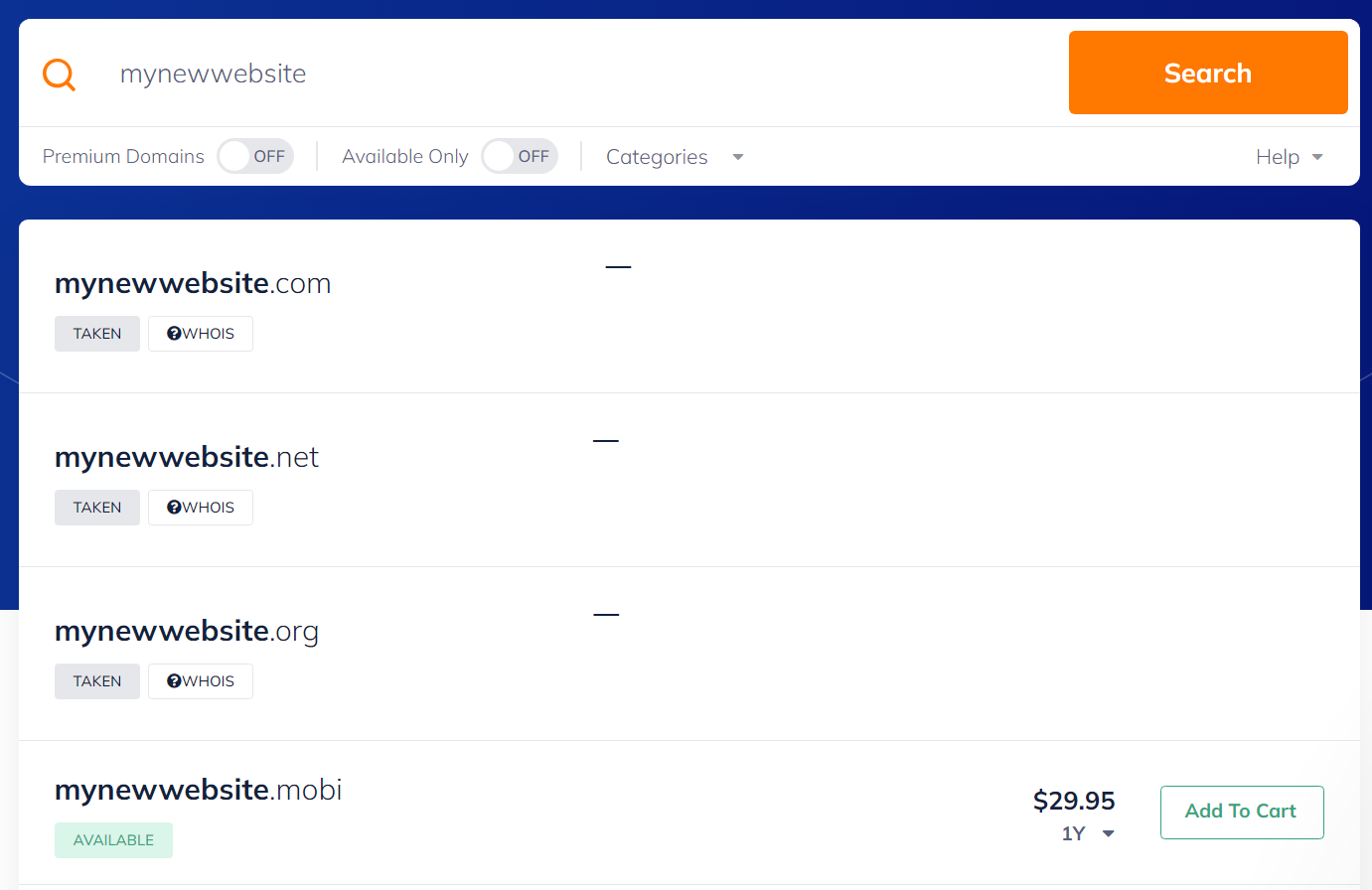
Once you have the parked domain, you can keep it as long you’re willing to pay the renewal fees. If you change your mind about using the parked domain, you can simply stop paying those fees, or try and resell it to another user.
#2. To Ensure Brand Credibility and Protection
A lot of well-established businesses buy multiple domain names, as long as those domains have anything to do with their brand. Google, for example, famously registers domain names that are common misspellings of the word “Google”.
The company also owns its domain name with pretty much every TLD that’s available:
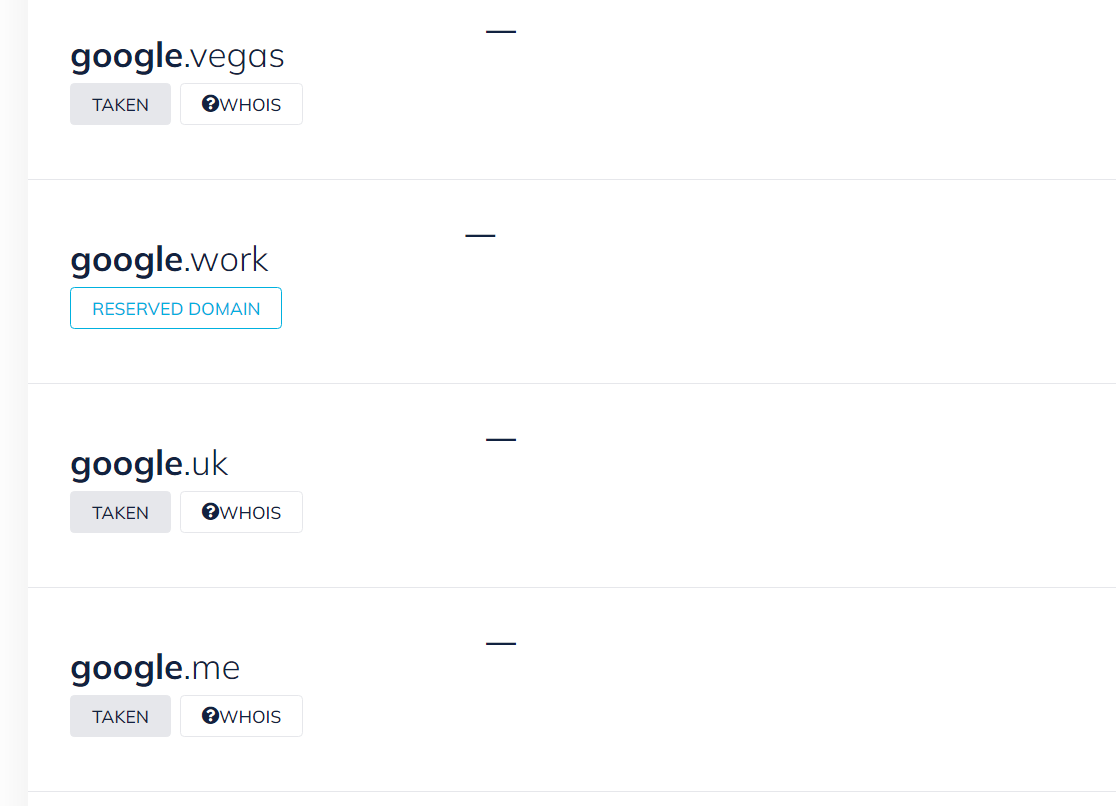
A lot of businesses use these secondary addresses to redirect traffic to their primary domain. This way, if anyone stumbles onto these ‘secret’ domains (or simply mistypes the URL), the business still gets that traffic.
You can also register these types of domain names, but park them rather than redirecting them. This can be useful for domain names that are related to the business, but can cast it in a bad light.
For example, if you run a website called myveganbakery.com, you could register myveganbakerysucks.com as well, and keep that as a parked domain. That way, you protect the primary domain name and your business from slander.
#3. To Protect Against Cybersquatting
You can set up parked domains to protect your brand, but also to prevent cybersquatting. This is a practice where someone registers domain names related to your site or business, in order to resell them to you at a higher price.
In most cases, you have no protection against cybersquatting. Anyone can go to a domain registrar, purchase domains similar to yours, and use them either to steal traffic or to force you to reach a deal with them.
Every parked domain that’s related to your primary domain will help protect you against cybersquatting. Moreover, as discussed earlier you can use each parked domain to redirect to your website, which can help drive traffic.
The only downside of having a domain parked to protect against cybersquatting is that you’ll need to pay for renewals. Cybersquatters are more likely to pick up expired domains. If you let these domains lapse, you might have to pay more in order to get them back.
#4. To Make A Profit Selling Parked Domains
Last but not least, this is perhaps the most common reason for domain parking. If you think you’ve found a valuable domain name and you’re not planning to use it, it can make sense to park it until an offer comes along.
It’s not uncommon for people to contact you asking about purchasing a specific domain, as long as they can find a way to get in touch with you. A simple WHOIS lookup usually makes that possible:
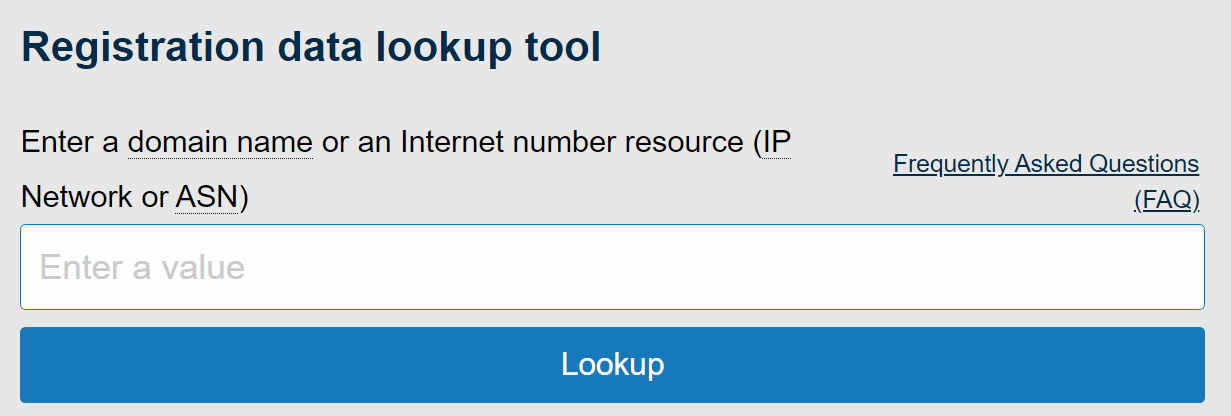
If you use WHOIS protection, you can still sell parked domains through a domain marketplace. Some domain registrars offer marketplaces where owners can sell unique domain names at a premium, or offload URLs they no longer need.

In other words, parked domains can be a potential investment opportunity. Other people get to buy a domain they think will work well for their business, and you get to earn money from it.
Conclusion
Maintaining a parked domain (or several of them) can be a smart move if you run a business or a successful website. As the domain holder, you can use the property in any way you want, and that includes keeping it parked until you’re ready to use or sell it.
To recap, here are the primary reasons people keep parked domains:
- To reserve them for a future business.
- To maintain brand credibility and protection.
- To protect against cybersquatting.
- To make a profit selling the parked domains.
Do you have any questions about how to acquire a parked domain? Let’s talk about them in the comments section below!

Sophia is a staff writer at WordCandy.co, where she produces quality blog content for WordPress plugin and theme developers, hosting providers, website development and design agencies, and other online businesses.
Leave a Reply