

Error messages can be annoying, especially when they interrupt your browsing experience.
Have you ever encountered an error message while browsing Google Chrome that says “err_quic_protocol_error”? This error message results from the QUIC protocol that Google uses to make browsing faster.
If this error message left you unsure of what to do next, we’re here to help.
In this article, I will discuss what the err_quic_protocol_error is, why it occurs, and share four easy ways to fix it.
What Is The ERR_QUIC_PROTOCOL_ERROR message?
The err_quic_protocol_error is a standard browser error message when browsing Google Chrome. When this message appears, it means that there is something wrong with the QUIC protocol.
The QUIC protocol is responsible for loading web pages faster. When the QUIC protocol encounters an error, it can cause the err_quic_protocol_error message to appear, and users may be unable to access various websites.
Although it increases browsing speed, this Google Chrome error message signifies that something went wrong when the protocol was used.
What Is The QUIC Protocol?
Before discussing the solutions, it’s helpful to understand what the QUIC protocol even means.
QUIC stands for Quick UDP Internet Connections.

It is an experimental transport protocol designed by Google to make browsing faster. The QUIC protocol improves website loading speed by reducing latency and minimizing connection setup time.
The QUIC protocol allows faster data transfer between your device and the server. This experimental quic protocol error can only occur for Google Chrome users.
Possible Causes Behind The ERR_QUIC_PROTOCOL_ERROR Message In Google Chrome
Now that we’ve defined what err_quic_protocol_error is and what the QUIC protocol is all about, it’s important to understand the causes behind the error message.
The err_quic_protocol_error can occur due to several reasons, including:
#1. Conflicts Due To Browser Extensions
Some browser extensions on your Google Chrome browser may be incompatible with the QUIC protocol, causing the error message to appear on your web page.
#2. VPN Issues
A virtual private network (VPN) can also cause the err_quic_protocol_error. Due to the security protocols in place with VPNs, they can interfere with the QUIC protocol.
#3. Firewall And antivirus Software Issues
Certain firewall and antivirus software programs can block Google Chrome from accessing the relevant network port for the QUIC protocol.
4 Easy Solutions To Fix the ERR_QUIC_PROTOCOL_ERROR Message
Now that we have identified the possible causes behind the err_quic_protocol_error message, let’s explore the solutions.
The following are 4 easy ways to fix err_quic_protocol_error.
#1. Disable The QUIC Protocol
The quickest way to resolve the err_quic_protocol_error message is to disable the QUIC protocol. This is a simple solution that can fix the error message right away. Follow the instructions below to do this.
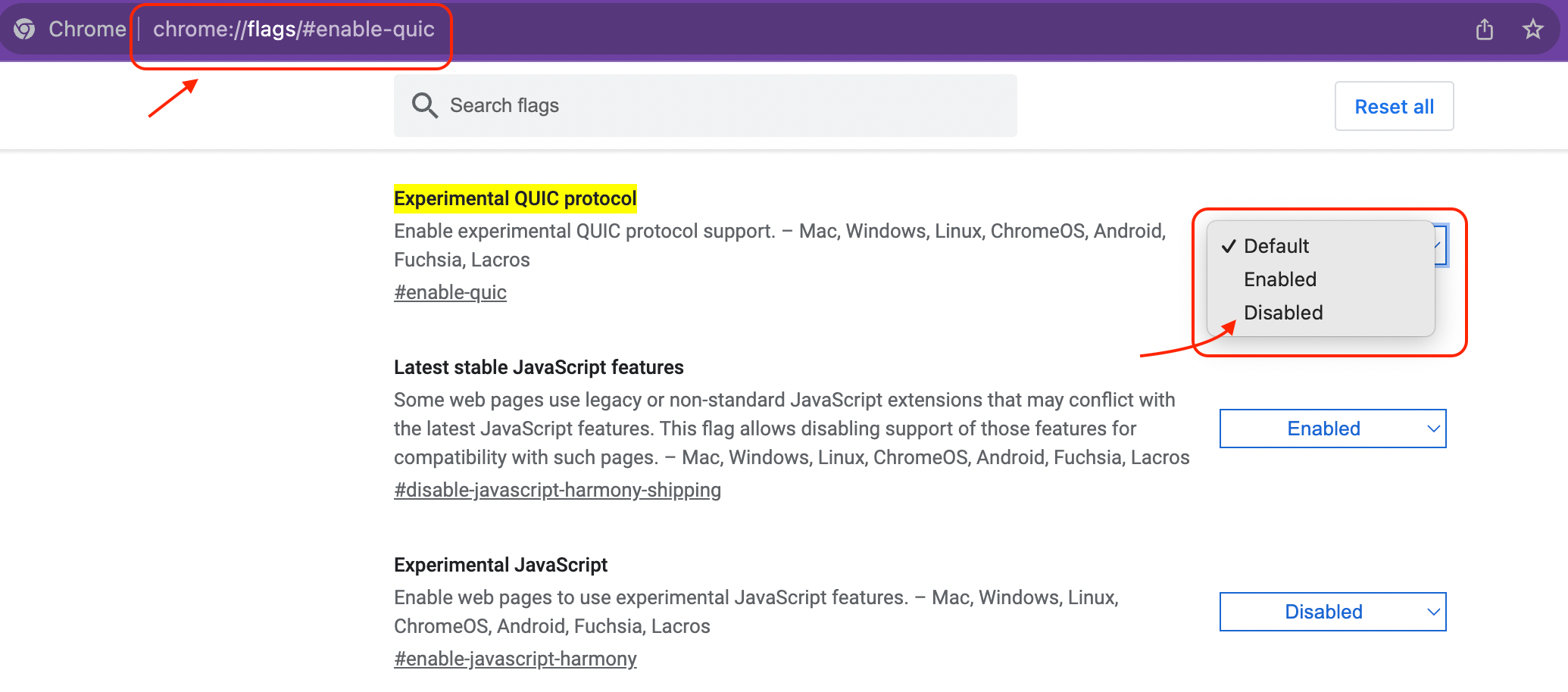
To disable the QUIC protocol, open a new tab in your Google Chrome browser and type in “chrome://flags.”
Once the experimental features page has opened, type “QUIC” in the search bar.
Next, click the drop-down menu and select “Disabled.” instead of the “Default” option.
Restart your browser, and the error should be fixed.
If the error message does not disappear, try the solutions mentioned below.
#2. Disable Browser Extensions
Another possible cause of the error could be a Google Chrome browser extension causing compatibility issues.
To fix the error using this solution, click on the three vertical dots in the top right corner of your Chrome browser screen.
Next, select “More Tools” and then select “Extensions.”
Disable all the Chrome extensions you have installed, and then restart the browser.

Note: If the error message disappears, only one of your extensions (and not all) might be the culprit. Toggle to Re-enable the extensions one by one and check which extension causes the error message to appear.
#3. Temporarily Disable Your VPN
VPN software can interfere with the connection between Google Chrome and the server, causing the err_quic_protocol_error message.
To fix this error, disable your VPN temporarily. To do so, open your VPN software and turn off the connection. After disabling the VPN, try reaccessing the website.
Remember that all VPN providers give instructions on temporarily disabling their VPN. Below are the steps from NordVPN to turn off a VPN on MacOS.

If the error message disappears after you switch off your VPN, this was the fix you needed. If the error message persists, read below for more solutions.
#4. Temporarily Disable Your Firewall And Antivirus Software
Firewalls and antivirus software are designed to protect your computer from threats. But sometimes, they can interfere with your internet connection and cause the err_quic_protocol_error message.
To fix the error, temporarily disable your firewall and antivirus software. Once both have been turned off, try reaccessing the website.
Check if the error message disappears. You may need to set some exceptions for the QUIC protocol or Google Chrome if it does.

Note: Remember to turn your firewall and antivirus software back on after conducting the test!
Conclusion: Final Thoughts
The err_quic_protocol_error message may seem complicated, but it has simple solutions. Issues with the QUIC protocol, browser extensions, and antivirus software sometimes cause an error message.
I have listed four easy ways to fix the error. Remember to disable the QUIC protocol and, disable browser extensions, temporarily switch off your VPN, firewall, and antivirus software.
I hope you find these solutions helpful. Remember, if one method doesn’t work, try another. If the problem persists, consider seeking technical support.
If you’re looking to fix the Error Code 1020 message next, check out this blog post.
Check Out Namehero For The Best WordPress Hosting Plans
Don’t forget, if you’re looking for reliable and affordable WordPress hosting services for your website, Namehero is among the best options in the market.
With Namehero, you can enjoy premium WordPress hosting services that are fast, secure, and dependable. We provide WordPress hosting at a fraction of the cost you might be currently paying! Click here to learn more!

Nirali has over a decade of experience working in marketing with startups in a variety of sectors, including e-commerce, ed-tech, and SaaS. She has a keen understanding of the unique challenges and opportunities facing early-stage companies and a track record of developing effective content strategies that drive growth and engagement.
Why is poeticious not working? It’s where I store all my work?